From Jesse Johnson at The Cripplegate:
Is it ever not a sin to lie? Or—to let the double negative cancel itself out and get right to the chase—does God ever put you in a position where sinning is the right thing to do?
This question is as bothersome as it is perennial. It invariably comes attached to this hypothetical: say you lived in Nazi Germany, and you have Jews hiding in your living room, and the SS guards knock on your door and ask if you are hiding Jews. What do you do? Do you lie?
Let me give you my conclusion, and then try and walk you there with me. First: GOD HATES LYING. So yes, it is always a sin to lie, and no, it is never ok to lie. Proverbs 12:12-13 explains why:
“No disaster overcomes the righteous, but the wicked are full of misery. Lying lips are detestable to Yahweh, but faithful people are His delight.”
Lying lips are one of the seven things that God finds detestable (Proverbs 6:16). Christians are called to let their yes be yes, and lying violates that basic principle (James 5:12). Meanwhile, God is a God of truth (John 14:7), while the devil is the father of lies (John 8:38). Lies are an affront to providence, as they imply that the world would be better if God simply would have worked it out more to our liking. Thus every lie is an attack against the sovereignty of God, and essentially places you in opposition to that which is true. Instead of lying, speak the truth (Col 3:9, Eph 4:22, 24).
It really is that simple.
The Philosophical Problem
The question is it ever ok to lie comes from a faulty ethical construction. In Christian ethics there are basically two schools: graded ethics, and absolute ethics. Graded ethics says there is a triage to God’s commands, and some are more important than others. When they contradict, always follow the more serious one. For example, they would say the duty owed to the Jews hiding in your living room is greater than the commands against lying. So it is better to lie than to betray those in your living room.
On the other hand, those that hold to absolute ethics (like me, Moses, and Jesus) say that all commands from God are binding, and it is never ok to set aside any of them. God doesn’t grade on a curve, so we shouldn’t view his commands in some kind of order of importance.
Those that hold to graded ethics use verses like Mark 12:31 (where Jesus says that Loving the Lord your God and loving your neighbor are the two greatest commandments) as evidence that God holds some of his commands to be higher than the others. Whereas one who follows absolute ethics would look at Mark 12:31 and say that those commands are greater because the other commands are flow out of them—which to say that violating any command would in some way be an offense to either your neighbor or God, but likely both.
The simple problem with the graded-ethics approach is that it is not taught by the Bible—verses like Mark 12:31 notwithstanding. The first person to be stoned to death in the OT was executed for picking up sticks on the Sabbath, so at the very least that causes some problem for the concept of graded morality. Regardless of absolute vs. graded ethics, the first people God strikes dead in the New Testament are Annanias and Sapphira for lying to the Holy Spirit. The moral of that has to be: if you are going to rate sins in some kind of order of seriousness, lying should be pretty close to the top.
The Hypothetical Problem
But this takes us back to the Jews hiding in the living room. What then? Well, when scheming up hypothetical ethical dilemmas, you have to remember that hypotheticals are literally problematic. They are contrived precisely because they expose a supposed weakness in a person’s argument.
So if you are going to play the hypothetical game, remember that God is sovereign, and with that comes his promise that every instance of temptation he will always provide a way of escape (1 Corinthians 10:13)… and that escape is NEVER going to involve sinning. God does not open your escape hatch through sin. In fact, in the context of 1 Corinthians 10, sin is the very thing that God gives you an escape from.
Thus, in any hypothetical moral dilemma you need to remember that there is an unstated contingent—namely, God will give you a way out that does not involve sin.
Back to the guards at the door
So we are back to the guards knocking on the door, and the Jews hiding in the living room. The ground rules are that you can’t sin, and that lying is a sin, and delivering people over to their death is unloving, which is to say that it too is sinful. What is left to do?
Well, this decision is really made before you took the Jews in. When you gave them refuge in your house, you did so while taking responsibility for their safety. If you are brave enough to hide them, then you better be brave enough to protect them. How can you hide them but not be willing to physically defend them? If the guards knock on your door, respond by telling them that they have no right to enter your house, and that what they are doing is morally reprehensible—but that Jesus offers forgiveness for their sins, and they need to repent. Then slam the door, and take the hypothetical from there. A person who is brave enough to lie but not brave enough to be a martyr, isn’t brave at all.
What about war time ethics
As absolutist as that sounds, the Bible keeps room in its moral constructs for war time ethics. God uses countries to bear the sword and punish evil doers. It is expected that war includes both deception and violence. An army can fake left and go right, because they are bearing the sword to suppress evil. But that is fundamentally different than a person—a civilian, if you will—who lies because they have a secret moral agenda. Even if their morality is right, it is undercut by lying because (remember) God will never put you in a position where lying is right thing to do.
What about Rahab
No conversation on lying would be complete without Rahab sneaking on to the set. “What about her?” you ask. “Didn’t she lie?” Well, yes…but that is hardly the point of that narrative. Rahab sided with Yahweh over and against her nation. She heard of God’s work in the wilderness, and when she met the spies, she was soundly converted by faith alone. That faith immediately manifested itself in her devotion to God and his people (James 2:25).
So the point of the Rahab narrative in Joshua 2 is that an idol-worshiping prostitute was radically saved, and that God then used her to help Israel enter the promised land. Did she lie? Yes. She had been a believer for all of ten minutes, so cut her some slack. Is she in the hall of faith in Hebrews 11? Yes. As shocking as it might seem, there are some believers who were both liars and prostitutes (or Sampson, who was a liar while with a prostitute). Yet somehow the gospel is greater than sin, and salvation comes through faith alone. Rahab is always held out as an example of faith for siding with God’s people, and is never held out as an example of lying for the glory of God.

Showing posts with label Cripplegate. Show all posts
Showing posts with label Cripplegate. Show all posts
Monday, June 24, 2013


Thursday, January 17, 2013
Its Just Oprah, not Metanoia
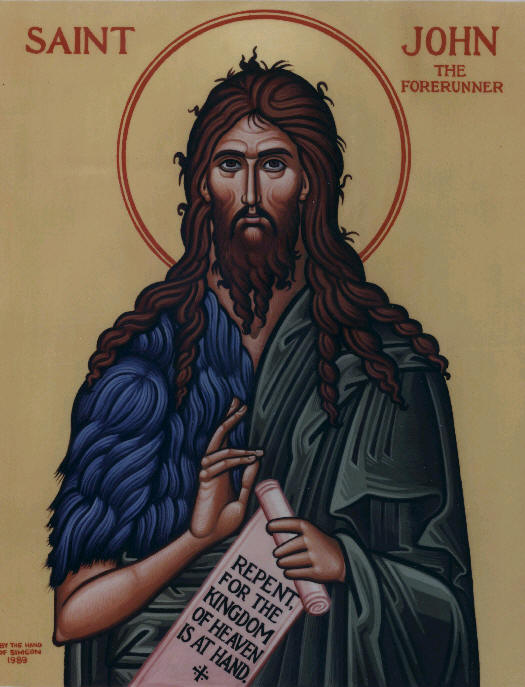 I found the juxtaposition startling. I had just finished jotting down notes on John the Baptist’s ministry in Luke 3:1-20, the short of which was “Repent!” I then scanned some news headlines and noticed that Lance Armstrong confessed. Wow! But he did so on a couch next to Oprah. Give me a break.
Repentance translates a Greek term, metanoia (μετάνοια; “change of mind, thought”), that indicates an alteration in one’s perspective that results in a change of behavior or pattern of life. It’s Old Testament roots are shub (שׁוּב; “turn; return”), as in return to God (e.g., Mal 3:7). As the converse side of faith – you turn from sin and turn toward God – repentance is no less the fruit of His sovereign grace as faith itself (e.g., Acts 11:18; 2 Tim 2:25). Unfortunately, repentance is often confused with a regret or an apology. But repentance is thorough, public and not self-preserving. You are renouncing what you once thought was acceptable and so no longer living in it. To get as practical as John the Baptist, you cease hating others by hoarding goods and begin to share (Luke 3:11). You no longer exploit opportunities beyond your reasonable authority (Luke 3:12). Or you quit using power over others simply for personal profit (Luke 3:14). You get the idea.
I’ve always favored Pink’s definition of repentance as capturing the thrust of the Bible’s teaching:
 Repentance is a supernatural and inward revelation from God, giving a deep consciousness of what I am in His sight, which causes me to loathe and condemn myself, resulting in a bitter sorrow for sin, a holy horror and hatred for sin, a turning away from or forsaking of sin. It is the discovery of God’s high and righteous claims upon me, and of my lifelong failure to meet those claims. It is the recognition of the holiness and goodness of His Law, and my defiant insubordination thereto. It is the perception that God has the right to rule and govern me, and of my refusal to submit unto Him. It is the apprehension that He has dealt in goodness and kindness with me, and that I have evilly repaid Him by having no concern for His honor and glory. It is the realization of His gracious patience with me, and how that instead of this melting my heart and causing me to yield loving obedience to Him, I have abused His forbearance by continuing a course of self-will… Thus, genuine and saving repentance is taking sides with God against myself.
- A.W. Pink, Repentance: What Saith the Scriptures?
In other words, repentance is not private, nor ambiguous, nor unrecognizable. It is as evident as the fruit hanging in an orchard (Luke 3:8). You know when you’ve repented and you know when someone else has, too. When they take sides with God against themselves, they’ve repented. When they pull up a chair with Oprah, you know they haven’t.
What’s funny is that even the LA Times gets this point:
This charade should cause an outcry. It is orchestrated manipulation of serious news and an affront to a public that adored and admired him for his athletic feats and charitable use of his celebrity. We weren’t very happy with baseball stars such as Mark McGwire and Alex Rodriguez when they, after years of denying or ducking the issue, admitted steroid use. But at least they came clean to reporters whose job it is to ask the things the public deserves to know. No hankies or couches. Just the cold truth.
Armstrong should be doing this in a big room filled with people with journalistic chops and the experience and inclination to use them. We have more than a handful of Pulitzer Prize winners in the L.A. Times newsroom willing and able. The New York Times and Washington Post could fill the room with capable reporters. CNN has plenty. The TV networks too.
… If you are going to ‘fess up, don’t make a Hollywood show out of it. This is making a sham out of shame.
Sadly, this Oprah episode will get a huge audience. We are a society of celebrity gawkers. We need less “Access Hollywood” and more PBS and NPR, but that’s not happening. It would be nice, on this one, if we could avoid slipping further into the abyss.
Lance Armstrong owes us the truth, the whole truth and nothing but the truth. And he owes it to us from somewhere other than the Oprah show, in which they cue the tears and hankies before they cut to commercial.
Bill Dwyre, in an article titled “Lance Armstrong Picks Wrong Way to Come Clean after Playing Dirty,” summed up the whole situation well: “This is making a sham out of shame.”
The LA Times gets it, but I wonder how many Christians will confuse Armstrong’s theatrics (not to mention Oprah’s opportunism!) with actual contrition, real repentance. Truth is, in many of our churches, we will accept a lot less than this as a substitute for repentance. When someone is overwhelmed by the consequences of their actions, or they regret the shame of being discovered, or some crisis shocks them into a (short-lived) sobriety, or if they just “feel bad” about what they’ve done – we’ll often call it repentance. But it is not. And we do not even need time to tell.
Repentance is not self-preserving – do you think that the tax collectors and soldiers who came to John were going to have to adjust their standard of living by repenting? Repentance is not private – people were actually to start receiving tunics and giving less to the soldiers and tax collectors. But Armstrong is just altering his public persona, from self-sufficient athlete to self-sufficient celebrity who was “brave enough” to feel bad about being caught on a television event. He’s just taking a different tack to privately preserving self-sufficiency.
Oprah has said that she’ll leave it for others to judge whether Armstrong is actually contrite – which translates a Greek idiom that means: “Be sure to watch!” I won’t be watching, I don’t need to. Because I’m pretty sure what John the Baptist would have said, “It’s just Oprah, not metanoia."
Thursday, January 10, 2013
Is Mormonism a Cult Or What?
A few months ago Franklin Graham found himself in all sort of evangelical hot water when he removed a page from the Billy Graham Evangelistic Association’s website that had labeled Mormonism as a cult. The timing of the removal—a few weeks before the presidential election and a few minutes after Billy Graham gave his presidential imprimatur to Romney—made any nuanced reasoning behind the Graham’s move impossible.
They compounded their problems when their defense of the action was “God has not called us to call other people names”—a defense which is about as thoughtful and persuasive as saying “Mormons really are nice people after all.” As Dan Phillips over at Pyromanics pointed out, how can you possibly argue with someone when they say that God has not called them to do what you think they should be doing? Doesn’t that mean you are arguing with God? Who, exactly, do you think you are?
But there remains an obvious question that bears exploring: Is Mormonism a cult? I want to put forward a nuanced answer: it depends on what you mean by Mormons, and it depends on what you mean by cult.
 First the cult part:
I read dozens of blogs skewering the Grahams for their defrocking Mormonism of its cult status, but I don’t remember seeing anyone lay out what exactly it means to be a cult. Certainly there are several definitions of cult. What are they, and how does one qualify?
In Walter Martin’s classic The Kingdom of the Cults, he borrows a definition form a book published in 1955 which defines cult as “any religious group which differs significantly in one or more respects as to belief or practice from those religious groups which are regarded as the normative expressions of religion in our total culture.”
But that definition is obviously inadequate. First, it hinges on the word significantly. Second, it is way too broad. It basically defines any group which has as a different “practice” than the “normative expressions of religion in the total culture.” What does “total culture” mean in an era of immigration and satellite TV? I’m sure that was a suitable concept in the 1950’s, but I don’t see how it works today. By that definition, Hinduism could be a cult in Florida, but not in Michigan, and certainly not in India. Meanwhile, Christianity itself would be considered a cult Nepal or Rome.
Martin was aware of that weakness of the definition, and so he added his own criteria: “A group of people gathered about a specific person’s misinterpretation of the Bible.” So for Martin a cult is a religious group that:
has significant differences in practices from normative expressions of religion in “total culture” is built around a specific misinterpretation of the Bible
But that definition also fails on some pretty basic levels. Do two Baptist churches that disagree on dispensationalism get to label each other as cults? It also fails because it definescult specifically in relation to Christianity. What about Islam? Certainly there are cults in Islam—most Muslims consider The Nation of Islam a cult, for example. Yet that is not possible with Martin’s definition. [Note: Martin does not seem to follow his own definition very carefully. He considers both the Baha’i movement an d Buddhism cults, even though they don’t seem built around a specific misinterpretation of the Bible.]
So are there any better definitions of cult?
The dictionary defines cult as “any particular system of religious worship” (Webster’s Dictionary). This is why when reading OT commentaries (or NT Wright…) there are constant references to the OT temple worship as “cultic.” It doesn’t mean that it was a false religion, but simply means that it was “religious.” Obviously the dictionary definition of the word is so broad that it is not really helpful. After all, by that definition every religion is a cult.
There is a better definition of cult. Many sociology books describe a cult as being a religious group that has the following distinctions:
- Built around a charismatic leader (or his successor) who is generally infallible
- A break off of another religion, and claims that it is correct while the group they left is apostate.
- Considered on the fringe of society, and outside of social norms (often aided by a sense of secrecy to the inner workings of the religion).
So that moves to the category of Mormonism. Does Mormonism fit these distinctives? They are built around a charismatic leader and their prophet is considered infallible (he has direct revelation from God, of course). It is obviously an apostate form of Christianity, so check there as well.
But are they considered on the fringe of society? That leads to the second question:
What do you mean by Mormon?:
Mormons essentially fall into two categories. Latter-day Saints (LDS), and Fundamentalist LDS. For the LDS, their temples are tourist attractions, Bryce Harper is a baseball phenom, Romney ran for President without his Mormonism being as big of a deal as Kennedy’s Catholicism, and Senate Majority Leader is a LDS (to say nothing about the fact that college students idolize American Idol David Archuleta). Every year, it is becoming tougher and tougher to argue that the church of LDS is on the fringe of society.
But the FLDS is another story all together. They are the fringe groups of Mormons in Texas, the Utah Arizona boarder, and parts of Canada. They practice polygamy, have their own prophets, are break-offs from the the church of LDS , and have been anathematized by the LDS. This group seems to fit every definition of cult, and even the LDS regard them as a cult.
So when people ask me “is Mormonism a cult?” I answer with two questions: “It depends on what you mean by Mormons. If by Mormons you mean the polygamists in the hills living in isolation, then yes. If by Mormons you mean LDS, then it depends on what you mean by cult.”
The dictionary definition calls Mormonism a cult, right along with every other religion in the world. Sociological definitions, along with Martin’s own definition, all hinge on if Mormonism is considered outside the norm of our culture. It is certainly a grey area. After all, it ,would be very difficult to say in Salt Lake City or Provo that Mormonism differs from the “normative expression of religion” (Martin’s definition) in that community. When you add the concept that Martin uses of “total culture” then certainly you have to consider politics (Mitt Romney, Henry Reid), music (David Archuleta), and sports (Bryce Harper). When you consider those categories, it becomes harder and harder to be dogmatic on the word cult. Even if it is one today, how many more years does that label stick? How many stars do there need to be before something is no longer on the fringe of the culture?
What is clear is that Mormonism, whether LDS or FLDS, is a false religion. It teaches a false way to God, and leads to eternal judgment. It is built on lies, and spreads through propaganda. And the only way for Mormons to be saved is to repent from their false religion, and find refuge in the gospel of Jesus Christ. That is what God has called the Grahams to preach, and who knows? Maybe that is exactly what they said to Romney before they took their webpage down.
Regardless, it is essential for Christians if they understand the uniqueness of the gospel and how to invite those who don’t know it to believe it—whether or not they are part of a cult. The real battle is over the gospel, not over a sociological category about whose religion is more influential in the culture.
Wednesday, August 29, 2012
Rescuing Daniel
 Of course you know about Daniel and the Lions’ Den. Even if you didn’t grow up with a high-tech flannel graph presentation in your Sunday-School class, or use your creative genius to turn a paper lunch bag into a ferocious man-eating beast, you could rehearse the story in vivid detail.But although we are familiar with Daniel’s rescue from the Lions’ den, he still seems to be trapped in children’s books, and is placed on the shelf between Mother Goose and Aesop’s fables. The 6th chapter of Daniel is more than a bed-time story, and if I can be honest with you, for a long time I missed the main point.• The main point of Daniel 6 is not Daniel’s example.
 Was Daniel a great servant of God? Is he worthy of imitation? Absolutely! And there is nothing wrong with imitating the faith of faithful men. That’s what we are instructed to do throughout Scripture (1 Corinthians 4:16, 11:1; Philippians 4:9). We need to live lives worthy of imitation and find those who are worthy of imitating. The author of Hebrews reminds us to be “imitators of those who through faith and patience inherit the promises” (Hebrews 6:12). That’s an application of Daniel 6, but it’s not the main point.
• The main point of Daniel 6 is not Daniel’s faith.

• The main point of Daniel 6 is not Daniel’s courage.

All of these are lessons that we can learn from Daniel 6, but if we miss the point at the end of the story we are missing the main point! What was it that struck King Darius as he walked away from the lions’ den? What words did Daniel record, as a fitting conclusion to this chapter? What are we supposed to take away from this narrative? Listen to this…
“Then Darius the king wrote to all the peoples, nations, and men of every language who were living in all the land: “May your peace abound! I make a decree that in all the dominion of my kingdom men are to fear and tremble before the God of Daniel…” (Daniel 6:25-26).
• The main point of Daniel 6 is Daniel’s God!
That’s the main point that Darius walked away from the den with, and that’s the main point that Daniel wants us to walk away from this chapter with. The great impression on Darius was not Daniel’s example, Daniel’s faith or Daniel’s courage, but rather the sovereign God that Daniel served. Do you fear and tremble before a sovereign God? Is that what you usually think of when you think of Daniel and the Lions’ den? I’m all for helping kids get a good night’s sleep, but let’s not be satisfied with answering the question “Where’s God when I’m afraid?” Let’s ask the more important question, “Who’s afraid of my God?”
Monday, August 20, 2012
Mad Libs for Devil's Advocates
With all the talk of debt and building funds, I thought this post from Clint Archer at the Cripplegate was especially poignant.
A really insightful question was posed to me recently by multiple people on different occasions in various ways. I could summarize the enquiry, “Is it wrong to do something that is not sinful, even though you know it’s not wise?”
This question has many applications, for example, entertainment choices, debt, disciplining one’s children, selecting a school, choosing friends, spending money, exercising Christian liberties, and pretty much anything covered in the Book of Proverbs.
So what do we do when our flesh wants to do something the Bible says is foolish, but not necessarily sinful?
Some Behavior is Just Plain Dumb.
We need remember that some activities we like are not particularly dastardly, they’re just unwise and poise us for consequences like a golf ball on a tee. E.g. watching certain lowbrow sitcoms, visiting your girlfriend’s house when no one else is home, shopping on December 24th, buying your kids vampire pulp fiction, smoking in a library, smoking at a gas station, smoking at all, etc.
The Solomonic street smarts of Proverbs and other wisdom snippets of Scripture catalogue for us a litany of behaviors that are simply stupid for Christians who are serious about loving the Lord with all their hearts, minds, and strength to engage in. You expect them of the spiritual neophytes and socially jejune, but not of believers who are serious about sanctification.
This is not meant to be a post about debt, so feel free to insert any Mad Lib combination of…
- gambling
- dating an unbeliever
- frequenting a night club
- smoking
- drinking
or any other conviction you have that the Bible says is the behavior characteristic mainly of people who end up…
- broke
- fornicating
- ruining their witness
- dying of lung cancer while smelling like an ashtray
- in AA meetings
But I will stick with debt, because I have as a “smoking gun exhibit A” the current economic climate and all its secular pundits as expert witnesses backing up what God has said all along.
Though going into debt isn’t an explicit prohibition (in fact He allowed Israel to lend money in Deut 15:6, which implies borrowing must be permissible) God certainly doesn’t hide from us His view of our clothing accounts…
- He lumps debtors with distressed and depressed people (1 Sam 22:2).
- He employs examples of fools in debt as an object lesson (Matt 18:34).
- He used being debt-free as a sign that He had blessed Israel (Deut 15:6).
- He warns quite unequivocally that “The rich rules over the poor, and the borrower is the slave of the lender” (Prov 22:7).
God is our Creator; when He gives instructions it is because He knows best. Proverbs is not just another anthology of advice out there to be shelved with fortune cookie strips and Oprah’s book club recommendations. God, who invented economics, in His wisdom urges us against going into debt. He also invented hormones, human perception, lungs, and other helpful aspects of life. He knows how they work, and He knows what instructions to give for their optimal use, for example, flee temptation, avoid the appearance of evil, be a good steward of your body, and many more.When God suggests a course of action, what special kind of fool would deliberately choose the opposite? Enter a special kind of fool: the biblically literate devil’s advocate.
But stupidity is not (always) sinful.
After a Bible study on debt/gambling/etc., the teacher is frequently accosted with objectors who have on their spiritual business card the self-designated moniker, “Devil’s Advocate.” Their diabolical opening arguments usually begin with the phrase, “But technically…” An unprepared teacher may flounder a bit when it is pointed out that technically the practice in question is not forbidden in Scripture. You might parry with “All things are lawful but not all are profitable” (1 Cor 6:12), to which they counter with this riposte: ”Do not go beyond what stands written” (1 Cor 4:6). And as soon as you concede that it isn’t sin per se, you are open to accusations of legalism, fundamentalism, or any -ism that lets people do what they really want to anyway.
So what do you do?
You forget about winning the argument, and go for the heart. This is what Jesus did when the Pharisees asked why His disciples plucked grain on the Sabbath (Luke 6:1-4). Ask the devil’s advocate what his/her highest aim in life is.
Is it to love God with all your heart, mind, and strength, and your neighbor as yourself? Well, yes, I suppose. Good. So then what is the course of action you should take, a) the one that the God you love says is stupid, dangerous, and characteristic of people who don’t love Him… or b) the wisest course of action that will build up your love for God, your testimony to unbelievers, your example to believers, and your general godliness?
Mmm, tough choice.
So, is choosing folly sin?
Here’s Solomon’s Mad Lib exercise:
The really ______ young man ventured to try ______, which God said was foolish, and expected ______, but of course suffered ______ and now realizes that God was ______ and he was really, really ______.
(For hints, read Proverbs 5).
Wednesday, August 1, 2012
Why Should We Care About the Definition of Marriage?
With all the drama surrounding Chick-Fil-A, the need is made increasingly apparent for Christians to continue to lovingly and resolutely declare God’s design for marriage.
Now, I’m not at all talking about politicking, putting our hope in government, or going all chicken-little about the moral failure of our country. God is sovereign, and our hope is in Christ alone. But I am talking about speaking God’s Word into the situations He places you in. It’s likely that as you seek to be a good steward of the Truth of God that has been entrusted to you, and a witness of it amongst your unbelieving friends, you’ll enter into the discussion of why the issue even matters to Christians anyway. Why do we care? What’s all the fuss about? I mean, why can’t we grant the same rights to two consenting adults who want to make a commitment to each other for life?
Not Just Because Homosexuality is a Sin
One answer you might be ready to give is that we Christians care about preventing the legalization of homosexual “marriage” because the Bible clearly states that homosexuality is sinful. Since the Bible is the inspired, inerrant, and infallible Word of God, and our sole authority for all matters of life and godliness (2Pet 1:3-4), we must accept its word as binding.
It’s hardly worth arguing that the Bible doesn’t forbid homosexuality. Proponents of that argument simply don’t have a leg to stand on. It’s clear that Scripture condemns homosexuality as sinful (Lev 18:22; Rom 1:25-27; 1Cor 6:9-10), and just as all other sins it is worthy of death (Rom 6:23). It is a mark of rebellion, and those who practice it will not inherit the kingdom of God, but along with the rest of those who persist in their sin “their part will be in the lake that burns with fire and brimstone, which is the second death” (Rev 21:8).
And since the purpose of the civil government is to promote the general good and well-being of society and to restrain the evil therein to the best of its ability (Gen 9:6-7; Rom 13:3-4), we believe the government shouldn’t sanction that which the Lord of the Universe expressly forbids. Violating God’s Word is never the best thing for any society, as long as Jesus is Lord.
But having said all that, I’m saying don’t give that answer. At least, don’t give just that answer.
Not Just Because God Himself Defines Marriage as Heterosexual
Another answer you might be ready to give is that we Christians care about preventing the legalization of homosexual “marriage” because God Himself is the One who created marriage, who performed the first marriage (Gen 2:18, 21-22), and He Himself defines marriage as being between only one man and one woman. And as God is the Lord of the Universe, we must accept His Word. Here’s what He says:
Then Yahweh God said, “It is not good for the man to be alone; I will make him a helper suitable for him.” … So Yahweh God caused a deep sleep to fall upon the man, and he slept; then He took one of his ribs and closed up the flesh at that place. God fashioned into a woman the rib which He had taken from the man, and brought her to the man.
God purposed to make a companion suitable to Adam when it became apparent that there was no fitting match among the creatures of the earth. And He sovereignly caused Adam to sleep deeply, Himself took one of Adam’s ribs and fashioned it into a woman, and then presented the man with his bride. God did not make another man from Adam’s rib, but made awoman. In God’s mind, only a woman was a “helper suitable for him.”
So when a Pharisee asks Jesus about divorce, it’s not an accident that the Lord of the Universe prefaces His comment on divorce by underscoring that God made humanity as “male and female” (Matt 19:4). God did not make us only male, or only female. He intentionally designed that a man shall leave his family and be joined to his wife, and thatthese two — this man and wife — should become one flesh (Matt 19:5). He does not speak of a man leaving his parents to be joined to his husband, but his wife.
And so the very definition of marriage from the Creator of (and thus, the authority on) marriage is that it be between one man and one woman. To sit quietly by, then, while our government — which we have been blessed with the right to participate in as (at least what used to be) a democratic republic — in rebellious, treasonous fashion seeks to redefine that given definition would itself be an act of treason against our King.
And yet having said all that, I’m saying don’t give that answer. At least, don’t give just that answer.
Because It’s a Matter of the Clarity of the Gospel
If we’re going to speak into this situation with any sort of prophetic voice (read: having a Biblical impact), we need to give the reasons why homosexuality is a sin, and why God has defined marriage between one man and one woman.
Marriage is a wonderful, beautiful, and glorious institution. But the truth is that marriage isnot those things in and of itself. God has designed marriage to be a symbol, or a picture, that points to something greater than itself. And it is only so wonderful, beautiful, and glorious because of that something greater that it points to: the Gospel of Jesus Christ. That is, after man rebelled against God in the Garden by sinning against Him, their sin separated them from God and subjected them to spiritual death. Because no human being could ever atone for his sin, the Father lovingly sent His Son Jesus to live the life we should have lived and to die the death we should have died, so that everyone who trusts in Him alone for their righteousness before God should not suffer eternal punishment, but should be saved. And of all those whom the Father has given to the Son, He will lose none. He will never forsake His bride, but will always live to make intercession for them (Heb 7:25).

In Ephesians 5, the Apostle Paul gives us the most amazing, breathtaking instruction on marriage in all of Scripture. There, he quotes Genesis 2:24, just like Jesus did in Matthew 19:5 and Mark 10:7-8: “For this reason a man shall leave his father and his mother and shall be joined to his wife, and the two shall become one flesh.” Then, the very next thing he says is, “This mystery is great; but I am speaking with reference to Christ and the church.”
Let that sink in. He is speaking about marriage with reference to Christ and the church. Keep that in mind as we consider other things he’s said in the passage.
Earlier, Paul was giving the Ephesian church instruction on how to conduct themselves in their marriages. He basically lays out a plan of loving headship on the husband’s part (Eph 5:25-30) and respectful submission on the wife’s part (Eph 5:22-24). Now, what is absolutelyastounding is the reasons he gives for why a husband must lovingly serve his wife and why a wife must respectfully submit to her husband.
- Ephesians 5:22-23 – Wives, be subject to your own husbands, as to the Lord. For the husband is the head of the wife, as Christ also is the head of the church, He Himself being the Savior of the body.
- Ephesians 5:24 – But as the church is subject to Christ, so also the wives ought to be to their husbands in everything.
- Ephesians 5:25-27 – Husbands, love your wives, just as Christ also loved the church and gave Himself up for her, so that He might sanctify her, having cleansed her by the washing of water with the word, that He might present to Himself the church in all her glory, having no spot or wrinkle or any such thing; but that she would be holy and blameless. So husbands ought also to love their own wives as their own bodies.
- Ephesians 5:28-30 – He who loves his own wife loves himself;for no one ever hated his own flesh, but nourishes and cherishes it, just as Christ also does the church,because we are members of His body.
This is absolutely staggering. Throughout Paul’s instruction on marriage, the basis for his commands is the work of Christ in His relationship with the Church. The Gospel is why husbands must love their wives and wives must submit to their husbands!
What is this all telling us? It’s substantiating the claim I made above: that marriage is a picture, or a parable, of Christ and the Church — of the Gospel of Christ’s covenant-keeping grace with a people to whom He has committed Himself, and who have committed themselves to Him. When Paul says that “This mystery is great,” and then tells us that he’s speaking about Christ and the Church, he’s establishing that marriage is designed to point us to the Gospel: that precious Good News that has saved us from sin, wrath, just punishment, fruitlessness, and a wasted life; that precious Good News that has gotten our sin out of the way so that we can enjoy fellowship with our Creator and Redeemer, “His face forever to behold” as He dwells among His people in love in the Paradise of the New Creation.

And that’s what should get our dander up. Not tax breaks. Not nomenclature. Not social agendas. The Gospel. Make sure the people you’re having these conversations with leave knowing the difference. And if they don’t know whythe Gospel is so precious to us, why it’s such a treasure, why it’s to be so rigorously defended and protected…
Tell them.
Saturday, June 9, 2012
How To Question God
In light of some of our recent discussions in Sunday School, I thought this article was great!
At this point, a chasm of difference arises. One the one hand, because of Zechariah questions how he can have a child, he is silenced until God fulfills his word. On the other hand, when Mary questions how she can have a child, she is re-assured that God will work through his Spirit to make it happen.
What’s the deal? Is God arbitrary in how he treats his people? Not at all. Listen to these questions:
ZECHARIAH
After Gabriel told him his wife would bear a son named John who will come in the spirit and the power of Elijah, Zechariah said, “ “How shall I know this? For I am an old man, and my wife is advanced in years” (Lk 1:18). Now, this is a rather odd response for a number of reasons. First, Zechariah was a man of God (1:6). Second, he was burning incense in the temple of the Lord alone, probably near the holy of holies (1:9). This is a significant role as he was close to God. Third, a divine and famous messenger from God is speaking to him (1:11, 19). For all these reasons, one would think Zechariah would immediately believe on account of the miraculous nature of the events transpiring.
Not only that, but if he (and his wife) was “righteous before God, walking blamelessly in all the commandments and statutes of the Lord” (1:6), then he would know that Sarah was barren and her body was old when she gave birth to Isaac. He would have known that Isaac’s wife Rachel was barren but God blessed her with a child. He would have known that Hannah was barren until God opened her womb and she bore Samuel. In truth, the theme of Miraculous pregnancies or of God opening the womb of the extremely old or of the extremely barren in order to bring about a child of promise was prevalent in the Old Testament. How could Zechariah miss this?
In my opinion, I don’t think Zechariah missed either the miraculous nature of the events around him or the Old Testament examples of miraculous births. It was simply a case of unbelief. Gabriel declares that Zechariah will be unable to speak, “because you did not believe my words” (1:19).
MARY
So what about Mary? Gabriel visits her in another unlikely manner, revealing an even greater fulfillment through her seed—the divine, spirit filled Son of God who will fulfill all the Davidic promises and redeem Israel will come through her! Like Zechariah, she also questions God’s messenger and says, “How will this be, since I am a virgin?” (1:34). The big difference here is that her question is not one of unbelief but of misunderstanding. She does not understand how she should obey orbelieve this message from God.
She might not understand how this will happen, since she is only betrothed and not married to Joseph, the descendent of David (1:27). If her child is a son of David, would she need to have him through Joseph a descendent of David? But what did the angel mean, then, when he said, “you will conceive in your womb and bear a son” (1:31)? For these reasons, Mary asks in order to clarify or to better understand how she should believe. Gabriel answered, “The Holy Spirit will come upon you, and the power of the Most High will overshadow you; therefore the child to be born will be called holy—the Son of God” (1:35).
In this way, both Zechariah and Mary question God. While one questions God in unbelief, the other questions God to believe.
HOW TO QUESTION GOD
Belief seeks understanding when it turns to God in ignorance or misunderstanding. On the other hand, unbelief asserts that something is impossible and turns to God only in skepticism. It is right to question God when you do not understand something; but it is wrong to question that God will do what he says. He is faithful to do what he has promised. You may not know how this will happen but be assured that it will happen. Seek understanding and do not think you understand what is and what is not impossible with God.
Ask in order to understand–not because you already do understand.
Subscribe to:
Posts (Atom)