Pages

Showing posts with label Pink. Show all posts

Thursday, January 17, 2013

Its Just Oprah, not Metanoia

I found the juxtaposition startling. I had just finished jotting down notes on John the Baptist’s ministry in Luke 3:1-20, the short of which was “Repent!” I then scanned some news headlines and noticed that Lance Armstrong confessed. Wow! But he did so on a couch next to Oprah. Give me a break.


Repentance translates a Greek term, metanoia (μετάνοια; “change of mind, thought”), that indicates an alteration in one’s perspective that results in a change of behavior or pattern of life. It’s Old Testament roots are shub (שׁוּב; “turn; return”), as in return to God (e.g., Mal 3:7). As the converse side of faith – you turn from sin and turn toward God – repentance is no less the fruit of His sovereign grace as faith itself (e.g., Acts 11:18; 2 Tim 2:25). Unfortunately, repentance is often confused with a regret or an apology. But repentance is thorough, public and not self-preserving. You are renouncing what you once thought was acceptable and so no longer living in it. To get as practical as John the Baptist, you cease hating others by hoarding goods and begin to share (Luke 3:11). You no longer exploit opportunities beyond your reasonable authority (Luke 3:12). Or you quit using power over others simply for personal profit (Luke 3:14). You get the idea.

I’ve always favored Pink’s definition of repentance as capturing the thrust of the Bible’s teaching:
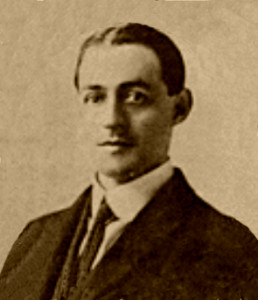
Repentance is a supernatural and inward revelation from God, giving a deep consciousness of what I am in His sight, which causes me to loathe and condemn myself, resulting in a bitter sorrow for sin, a holy horror and hatred for sin, a turning away from or forsaking of sin. It is the discovery of God’s high and righteous claims upon me, and of my lifelong failure to meet those claims. It is the recognition of the holiness and goodness of His Law, and my defiant insubordination thereto. It is the perception that God has the right to rule and govern me, and of my refusal to submit unto Him. It is the apprehension that He has dealt in goodness and kindness with me, and that I have evilly repaid Him by having no concern for His honor and glory. It is the realization of His gracious patience with me, and how that instead of this melting my heart and causing me to yield loving obedience to Him, I have abused His forbearance by continuing a course of self-will… Thus, genuine and saving repentance is taking sides with God against myself.

- A.W. Pink, Repentance: What Saith the Scriptures?

In other words, repentance is not private, nor ambiguous, nor unrecognizable. It is as evident as the fruit hanging in an orchard (Luke 3:8). You know when you’ve repented and you know when someone else has, too. When they take sides with God against themselves, they’ve repented. When they pull up a chair with Oprah, you know they haven’t.

What’s funny is that even the LA Times gets this point:
This charade should cause an outcry. It is orchestrated manipulation of serious news and an affront to a public that adored and admired him for his athletic feats and charitable use of his celebrity. We weren’t very happy with baseball stars such as Mark McGwire and Alex Rodriguez when they, after years of denying or ducking the issue, admitted steroid use. But at least they came clean to reporters whose job it is to ask the things the public deserves to know. No hankies or couches. Just the cold truth.
Armstrong should be doing this in a big room filled with people with journalistic chops and the experience and inclination to use them. We have more than a handful of Pulitzer Prize winners in the L.A. Times newsroom willing and able. The New York Times and Washington Post could fill the room with capable reporters. CNN has plenty. The TV networks too.
… If you are going to ‘fess up, don’t make a Hollywood show out of it. This is making a sham out of shame.
Sadly, this Oprah episode will get a huge audience. We are a society of celebrity gawkers. We need less “Access Hollywood” and more PBS and NPR, but that’s not happening. It would be nice, on this one, if we could avoid slipping further into the abyss.

Lance Armstrong owes us the truth, the whole truth and nothing but the truth. And he owes it to us from somewhere other than the Oprah show, in which they cue the tears and hankies before they cut to commercial.

Bill Dwyre, in an article titled “Lance Armstrong Picks Wrong Way to Come Clean after Playing Dirty,” summed up the whole situation well: “This is making a sham out of shame.”

The LA Times gets it, but I wonder how many Christians will confuse Armstrong’s theatrics (not to mention Oprah’s opportunism!) with actual contrition, real repentance. Truth is, in many of our churches, we will accept a lot less than this as a substitute for repentance. When someone is overwhelmed by the consequences of their actions, or they regret the shame of being discovered, or some crisis shocks them into a (short-lived) sobriety, or if they just “feel bad” about what they’ve done – we’ll often call it repentance. But it is not. And we do not even need time to tell.

Repentance is not self-preserving – do you think that the tax collectors and soldiers who came to John were going to have to adjust their standard of living by repenting? Repentance is not private – people were actually to start receiving tunics and giving less to the soldiers and tax collectors. But Armstrong is just altering his public persona, from self-sufficient athlete to self-sufficient celebrity who was “brave enough” to feel bad about being caught on a television event. He’s just taking a different tack to privately preserving self-sufficiency.
Oprah has said that she’ll leave it for others to judge whether Armstrong is actually contrite – which translates a Greek idiom that means: “Be sure to watch!” I won’t be watching, I don’t need to. Because I’m pretty sure what John the Baptist would have said, “It’s just Oprah, not metanoia."

Sunday, August 5, 2012

Attributes of God


"In the beginning, God" (Gen. 1:1). There was a time, if "time" is could be called, when God, in the unity of His nature (though subsisting equally in three Divine Persons), dwelt all alone. "In the beginning, God." There was no heaven, where His glory is now particularly manifested. There was no earth to engage His attention. There were no angels to hymn His praises; no universe to be upheld by the word of His power. There was nothing, no one, but God; and that, not for a day, a year, or an age, but "from everlasting." During a past eternity, God was alone: self-contained, self-sufficient, self-satisfied; in need of nothing. Had a universe, had angels, had human beings been necessary to Him in any way, they also had been called into existence from all eternity. The creating of them when He did, added nothing to God essentially. He changes not (Mal. 3:6), therefore His essential glory can be neither augmented nor diminished.
God was under no constraint, no obligation, no necessity to create. That He chose to do so was purely a sovereign act on His part, caused by nothing outside Himself, determined by nothing but His own mere good pleasure; for He "worketh all things after the counsel of His own will" (Eph. 1:11). That He did create was simply for His manifestative glory. Do some of our readers imagine that we have gone beyond what Scripture warrants? Then our appeal shall be to the Law and the Testimony: "Stand up and bless the Lord your God forever and ever: and blessed be Thy glorious name, which is exalted above all blessing and praise" (Neh. 9:5). God is no gainer even from our worship. He was in no need of that external glory of His grace which arises from His redeemed, for He is glorious enough in Himself without that. What was it moved Him to predestinate His elect to the praise of the glory of His grace? It was, as Ephesians 1:5 tells us, according to the good pleasure of His will.

We are well aware that the high ground we are here treading is new and strange to almost all of our readers; for that reason it is well to move slowly. Let our appeal again be to the Scriptures. At the end of Romans 11, where the apostle brings to a close his long argument on salvation by pure and sovereign grace, he asks, "For who hath known the mind of the Lord? Or who hath been His counsellor? Or who hath first given to Him, and it shall be recompensed to him again?" (vv. 34,35). The force of this is, it is impossible to bring the Almighty under obligations to the creature; God gains nothing from us. If thou be righteous, what givest thou Him? Or what receiveth He of thine hand? Thy wickedness may hurt a man as thou art; and thy righteousness may profit the son of man (Job 35:7,8), but it certainly cannot affect God, who is all-blessed in Himself. When ye shall have done all those things which are commanded you, say, We are unprofitable servants (Luke 17:10)—our obedience has profited God nothing.

It is perfectly true that God is both honored and dishonored by men; not in His essential being, but in His official character. It is equally true that God has been "glorified" by creation, by providence, and by redemption. This we do not and dare not dispute for a moment. But all of this has to do with His manifestative glory and the recognition of it by us. Yet had God so pleased He might have continued alone for all eternity, without making known His glory unto creatures. Whether He should do so or not was determined solely by His own will. He was perfectly blessed in Himself before the first creature was called into being. And what are all the creatures of His hands unto Him even now? Let Scripture again make answer: "Behold, the nations are as a drop of a bucket, and are counted as the small dust of the balance: behold, He taketh up the isles as a very little thing. And Lebanon is not sufficient to burn, nor the beasts thereof sufficient for a burnt offering. All nations before Him are as nothing; and they are counted to Him less than nothing, and vanity. To whom then will ye liken God? or what likeness will ye compare unto Him?" (Isa. 40:15-18). That is the God of Scripture; alas, He is still "the unknown God" (Acts 17:23) to the heedless multitudes. "It is He that sitteth upon the circle of the earth, and the inhabitants thereof are as grasshoppers; that stretcheth out the heavens as a curtain, and spreadeth them out as a tent to dwell in: that bringeth the princes to nothing; He maketh the judges of the earth as vanity" (Isa. 40:22,23). How vastly different is the God of Scripture from the god of the average pulpit!


Nor is the testimony of the New Testament any different from that of the Old: how could it be, seeing that both have one and the same Author! There too we read, "Which in His times He shall show, who is the blessed and only Potentate, the King of kings, and Lord of lords: Who only bath immortality, dwelling in the light which no man can approach unto; whom no man bath seen, nor can see: to whom be honour and power everlasting, Amen" (1 Tim. 6:16). Such an One is to be revered, worshipped, adored. He is solitary in His majesty, unique in His excellency, peerless in His perfections. He sustains all, but is Himself independent of all. He gives to all, but is enriched by none.


Analogy has been drawn between a savage finding a watch upon the sands, and from a close examination of it he infers a watch-maker. So far so good. But attempt to go further: suppose that savage sits down on the sand and endeavors to form to himself a conception of this watch-maker, his personal affections and manners; his disposition, acquirements, and moral character—all that goes to make up a personality; could he ever think or reason out a real man—the man who made the watch, so that he could say, "I am acquainted with him?" It seems trifling to ask such questions, but is the eternal and infinite God so much more within the grasp of human reason? No, indeed! The God of Scripture can only be known by those to whom He makes Himself known.

Nor is God known by the intellect. "God is Spirit" (John 4:24), and therefore can only be known spiritually. But fallen man is not spiritual, he is carnal. He is dead to all that is spiritual. Unless he is born again supernaturally brought from death unto life, miraculously translated out of darkness into light, he cannot even see the things of God (John 3:3), still less apprehend them (1 Cor. 2:14). The Holy Spirit has to shine in our hearts (not intellects) in order to give us "the knowledge of the glory of God in the face of Jesus Christ" (2 Cor. 4:6). And even that spiritual knowledge is but fragmentary. The regenerated soul has to grow in grace and in the knowledge of the Lord Jesus (2 Pet. 3.18).


You can read the entire book here...

Saturday, July 7, 2012

Quote of the Day

“Subject to none, influenced by none, absolutely independent: God does as He pleases, only as He pleases. None can thwart Him, none can hinder Him.”
– A. W. Pink

Sunday, June 17, 2012

Preachers on Preaching

Here are ten reminders for those who preach and teach the Word of God … as confirmed by some of history’s greatest preachers.

1. Effective ministry consists not of fads or gimicks, but of faithfully preaching the truth.

Charles Spurgeon: Ah, my dear friends, we want nothing in these times for revival in the world but the simple preaching of the gospel. This is the great battering ram that shall dash down the bulwarks of iniquity. This is the great light that shall scatter the darkness. We need not that men should be adopting new schemes and new plans. We are glad of the agencies and assistances which are continually arising; but after all, the true Jerusalem blade, the sword that can cut to the piercing asunder of the joints and marrow, is preaching the Word of God. We must never neglect it, never despise it. The age in which the pulpit it despised, will be an age in which gospel truth will cease to be honored. . . . God forbid that we should begin to depreciate preaching. Let us still honor it; let us look to it as God’s ordained instrumentality, and we shall yet see in the world a repetition of great wonders wrought by the preaching in the name of Jesus Christ.

Source: Charles Spurgeon, “Preaching! Man’s Privilege and God’s Power,” Sermon (Nov. 25, 1860).

2. Preaching is a far more serious task than most preachers realize.

Richard Baxter: And for myself, as I am ashamed of my dull and careless heart, and of my slow and unprofitable course of life, so, the Lord knows, I am ashamed of every sermon I preach; when I think what I have been speaking of, and who sent me, and that men’s salvation or damnation is so much concerned in it, I am ready to tremble lest God should judge me as a slighter of His truths and the souls of men, and lest in the best sermon I should be guilty of their blood. Me thinks we should not speak a word to men in matters of such consequence without tears, or the greatest earnestness that possibly we can; were not we too much guilty of the sin which we reprove, it would be so.

Source: Richard Baxter, “The Need for Personal Revival.” Cited from Historical Collections Relating to Remarkable Periods of the Success of the Gospel, ed. John Gillies (Kelso: John Rutherfurd, 1845), 147.

3. Faithfulness in the pulpit begins with the pursuit of personal holiness.

Robert Murray M’Cheyne: Take heed to thyself. Your own soul is your first and greatest care. You know a sound body alone can work with power; much more a healthy soul. Keep a clear conscience through the blood of the Lamb. Keep up close communion with God. Study likeness to Him in all things. Read the Bible for your own growth first, then for your people. Expound much; it is through the truth that souls are to be sanctified, not through essays upon the truth.

Source: Robert Murray M’Cheyne, letter dated March 22, 1839, to Rev W.C. Burns, who had been named to take M’Cheyne’s pulpit during the latter’s trip to Palestine. Andrew Bonar, ed, Memoir and Remains of Robert Murray M’Cheyne(Banner of Truth, 1966), 273-74.

4. Powerful preaching flows from powerful prayer.

E. M. Bounds: The real sermon is made in the closet. The man – God’s man – is made in the closet. His life and his profoundest convictions were born in his secret communion with God. The burdened and tearful agony of his spirit, his weightiest and sweetest messages were got when alone with God. Prayer makes the man; prayer makes the preacher; prayer makes the pastor. . . . Every preacher who does not make prayer a mighty factor in his own life and ministry is weak as a factor in God’s work and is powerless to project God’s cause in this world.

Source: E.M. Bounds, Power Through Prayer. From chapter 1, “Men of Prayer Needed.”

5. Passionate preaching starts with one’s passion for Christ.

Phillip Brooks: Nothing but fire kindles fire. To know in one’s whole nature what it is to live by Christ; to be His, not our own; to be so occupied with gratitude for what He did for us and for what He continually is to us that His will and His glory shall be the sole desires of our life . . . that is the first necessity of the preacher.

Source: Phillips Brooks, Lectures on Preaching, originally published in 1877. Republished in 1989 by Kregel under the title The Joy of Preaching. As cited in “The Priority of Prayer in Preaching” by James Rosscup, The Masters Seminary Journal, Spring 1991.

6. The preacher is a herald, not an innovator.

R. L. Dabney: The preacher is a herald; his work is heralding the King’s message. . . . Now the herald does not invent his message; he merely transmits and explains it. It is not his to criticize its wisdom or fitness; this belongs to his sovereign alone. On the one hand, . . . he is an intelligent medium of communication with the king’s enemies; he has brains as well as a tongue; and he is expected so to deliver and explain his master’s mind, that the other party shall receive not only the mechanical sounds, but the true meaning of the message. On the other hand, it wholly transcends his office to presume to correct the tenor of the propositions he conveys, by either additions or change. . . . The preacher’s business is to take what is given him in the Scriptures, as it is given to him, and to endeavor to imprint it on the souls of men. All else is God’s work.

Source: R.L. Dabney, Evangelical Eloquence: A Course of Lectures on Preaching(Banner of Truth, 1999; originally published as Sacred Rhetoric, 1870), 36-37.

7. The faithful preacher stays focused on what matters.

G. Campbell Morgan: Nothing is more needed among preachers today than that we should have the courage to shake ourselves free from the thousand and one trivialities in which we are asked to waste our time and strength, and resolutely return to the apostolic ideal which made necessary the office of the diaconate. [We must resolve that] “we will continue steadfastly in prayer, and in the ministry of the Word.”

Source: G. Campbell Morgan, This Was His Faith: The Expository Letters of G. Campbell Morgan, edited by Jill Morgan (Fleming Revell, Westwood, NJ), 1952.

8. The preacher’s task is to make the text come alive for his hearers.

D. Martyn Lloyd-Jones: As preachers we must not forget this. We are not merely imparters of information. We should tell our people to read certain books themselves and get the information there. The business of preaching is to make such knowledge live. The same applies to lecturers in Colleges. The tragedy is that many lecturers simply dictate notes and the wretched students take them down. That is not the business of a lecturer or a professor. The students can read the books for themselves; the business of the professor is to put that on fire, to enthuse, to stimulate, to enliven. And that is the primary business of preaching. Let us take this to heart. … What we need above everything else today is moving, passionate, powerful preaching. It must be ‘warm’ and it must be ‘earnest’.

Source: D. Martyn Lloyd-Jones, “Jonathan Edwards and the Crucial Importance of Revival.” Lecture delivered at the Puritan and Westminster Conference (1976).

9. The preacher is to be Christ-exalting, not self-promoting.

R. B. Kuiper: The minister must always remember that the dignity of his office adheres not in his person but in his office itself. He is not at all important, but his office is extremely important. Therefore he should take his work most seriously without taking himself seriously. He should preach the Word in season and out of season in forgetfulness of self. He should ever have an eye single to the glory of Christ, whom he preaches, and count himself out. It should be his constant aim that Christ, whom he represents, may increase while he himself decreases. Remembering that ministermeans nothing but servant, he should humbly, yet passionately, serve the Lord Christ and His church.

Source: R.B. Kuiper, The Glorious Body of Christ (Banner of Truth, 1966), 140-42.

10. Faithful preaching requires great personal discipline and sacrifice.

Arthur W. Pink: The great work of the pulpit is to press the authoritative claims of the Creator and Judge of all the earth—to show how short we have come of meeting God’s just requirements, to announce His imperative demand of repentance. . . . It requires a “workman” and not a lazy man—a student and not a slothful one—who studies to “show himself approved unto God” (2 Tim. 9:15) and not one who seeks the applause and the shekels of men.

Source: A. W. Pink, “Preaching False and True,” Online Source.

Sunday, June 3, 2012

Quote of the Day

“The new birth is the dividing line between Heaven and Hell. In God’s sight there are but two classes of people on this earth: those who are dead in sins, and those who are walking in newness of life… In view of this solemn fact, how momentous is the question, Have I been born again? If not, and you die in your present state, you will wish you had never been born at all.

Tens of thousands of professing Christians are filled with a vain and presumptuous confidence that all is well with them. They delude themselves with hopes of mercy while continuing to live in a course of self-will and self-pleasing. They fancy they are fitted for Heaven, while every day that passes finds them the more prepared for Hell.

The principal device of Satan is to deceive people into imagining that they can successfully combine the world with God, allow the flesh while pretending to the Spirit, and thus make the best of both worlds.”

A. W. Pink from Regeneration or The New Birth

Monday, April 2, 2012

Quote of the Day

“One second of glory will outweigh a lifetime of suffering. What were the years of toil, of sickness, of battling with poverty, of sorrow in any or every form, when compared with the glory of Immanuel’s land! One draught of the river of pleasure at God’s right hand, one breath of Paradise, one hour amid the blood-washed around the throne, shall more than compensate for all the tears and groans of earth.”

– A.W. Pink

Saturday, February 11, 2012

The New Birth

The new birth is very, very much more than simply shedding a few tears due to a temporary remorse over sin. It is far more than changing our course of life, the leaving off of bad habits and the substituting of good ones. It is something different from the mere cherishing and practising of noble ideals. It goes infinitely deeper than coming forward to take some popular evangelist by the hand, signing a pledge-card, or “joining the church.” The new birth is no mere turning over a new leaf but is the inception and reception of a new life. It is no mere reformation but a complete transformation. In short, the new birth is a miracle, the result of the supernatural operation of God. It is radical, revolutionary, lasting.

Here then is the first thing, in time, which God does in His own elect. He lays hold of those who are spiritually dead and quickens them into newness of life. He takes up one who was shapen in iniquity and conceived in sin, and conforms him to the image of His Son. He seizes a captive of the Devil and makes him a member of the household of faith. He picks up a beggar and makes him joint-heir with Christ. He comes to one who is full of enmity against Him and gives him a new heart that is full of love for Him. He stoops to one who by nature is a rebel and works in him both to will and to do of His own good pleasure. By His irresistible power He transforms a sinner into a saint, an enemy into a friend, a slave of the Devil into a child of God.

– A. W. Pink, The Sovereignty of God.

Monday, January 23, 2012

Quote of the Day

“The Christian who has stopped repenting has stopped growing.”
– A.W. Pink