Pages

Showing posts with label Repentance. Show all posts

Wednesday, June 25, 2014

Spiritual Fallout

From Grace to You:

The disaster at the Chernobyl nuclear reactor power plant released four hundred times the amount of radioactive material released in the bombing of Hiroshima. Experts estimate that as much as 60 percent of the fallout from the Chernobyl disaster landed in the neighboring nation of Belarus.
I’ve had the privilege to minister alongside faithful pastors and church leaders from Belarus, and they can attest to the dramatic, tragic effects of the disaster. The plume of smoke and debris deposited radioactive material across much of the country. The toxic pollution permeated the soil and the water supply, effectively poisoning the entire country, and extending the impact of the disaster to future generations.
Just as environmental pollution can wreak long-lasting devastation across a wide region, the same is true of spiritual poison. False teaching can create years—even generations—of spiritual confusion, corruption, and collapse. But unlike a rogue cloud of radioactive material, false teaching can and must be defended against.
There is a particular stripe of false teaching that has caused a great deal of destruction in the church for several decades—a spiritual scourge that has sown confusion and corruption into congregations around the world. See if you can spot it in the statements below.
  • Repentance is just a synonym for faith. Turning from sin is not required for salvation.
  • Saving faith is simply being convinced or giving credence to the truth of the gospel. It is not a personal commitment to Christ.
  • Faith might not last. It is a gift of God, but it can collapse, be overthrown or subverted, and can even turn into unbelief.
  • Christians can lapse into a state of permanent spiritual barrenness and lifelong carnality. Born again people can continuously live like the unsaved.
  • Disobedience and prolonged sin are no reason to doubt one’s salvation. Spiritual fruit is not a given in the Christian life.
  • Nothing guarantees that a Christian will love God.
  • All who claim Christ by faith as Savior, regardless of their lifestyle, should be assured they belong to God. It is dangerous and destructive to question the salvation of professing Christians.
  • The New Testament writers never questioned the reality of their readers’ faith.
Those shocking statements do not resemble the gospel of Jesus Christ and His apostles. They are in fact satanic lies meant to give men and women false assurance of their salvation and cripple the transforming work of the Holy Spirit.
And yet those lies have a pervasive impact in the church today. Like poisonous fallout, that false teaching permeates the very soil of evangelicalism, and the tainted fruit of this spiritual catastrophe is deadly.
But there is an antidote to this spiritual toxin. It’s found in 1 John, a book which presents the people of God with several tests to determine the true nature of their faith. In particular, 1 John 3:4-10 gets to the heart of how believers are to think and act as new creatures in Christ:
Everyone who practices sin also practices lawlessness; and sin is lawlessness. You know that He appeared in order to take away sins; and in Him there is no sin. No one who abides in Him sins; no one who sins has seen Him or knows Him. Little children, make sure no one deceives you; the one who practices righteousness is righteous, just as He is righteous; the one who practices sin is of the devil; for the devil has sinned from the beginning. The Son of God appeared for this purpose, to destroy the works of the devil. No one who is born of God practices sin, because His seed abides in him; and he cannot sin, because he is born of God. By this the children of God and the children of the devil are obvious: anyone who does not practice righteousness is not of God, nor the one who does not love his brother.
Over the next several days, we’re going to consider the unmistakable truth spelled out in those verses: that the believer’s life is completely incompatible with a lifestyle of sin.

Saturday, April 20, 2013

Quote of the Day


“No one in the history of the world has been more inclusive of repentant sinners than Jesus and no one has been more intolerant of sin.”

– Kevin DeYoung

Monday, April 15, 2013

Repentance vs Defensiveness

From Gavin Ortlund:

It seems to me that we tend to respond to accurate criticism in one of two ways: repentance or defensiveness. These two reactions are as different as heaven and hell. A defensive heart says, “but look at what I did right!” (diversion). A repentant heart says, “here specifically is what I did wrong” (honesty). A defensive heart says, “but look at what was done to me!” (distraction). A repentant heart says, “here is how I contributed to the conflict” (ownership). A defensive heart says, “it wasn’t that bad” (downplaying). A repentant heart says, “it was a big deal” (admission).

Our default mode – in and out of the church – seems to be defensiveness. I know mine is. Nothing is more natural when we feel threatened by a criticism than to divert, distract, and downplay. Its as instinctive as flinching when a punch is coming. In my experience, a heart of repentance is something I have to work at. I have to say things like, “wait a minute. Think this through. Why does this criticism hurt you the way it does? Remember your identity is in Christ. Remember you’re identity is not at stake. Relax! Is there something you can learn here?” Its a counter-intuitive feeling, like learning to use a muscle we didn’t know we had for the first time. Or better: learning to relax a muscle for the first time that we’ve always kept tight. Its a kind of paradox: an effort at relaxing, a striving to cease striving, a struggle to give up.

The gospel alone can free us for honesty, ownership, and admission, because the gospel alone destroys the sting and judgment associated with criticism. The gospel takes away the fear that drives defensiveness and frees us to openly admit our shortcomings. The gospel says, “in the place of your deepest failure and shame you are loved most tenderly.” The gospel says, “your deepest fears were already born by Christ.” The gospel says, “your sins were exposed and dealt with at the cross. The battle is already over.”

It makes me think of a man who is standing on trial before a large audience. A long list of (accurate) charges is read. Everyone is watching. And the man responds, “the charges against me are 100% true and fair. I am responsible. No one else is to blame. There is no excuse. And it is a big deal.” A man who is free to be that non-defensive is the happiest and most indestructible man in the world. He has died to himself; his identity comes from something or someone else. He is fearless.

This is what the gospel does for us. In the court of God, which matters infinitely more than any human court, we have already been tried, and through Christ we have already been acquitted. Thank you, Jesus. Help us to be so secure in your love that we are fearless to repent.

Monday, April 8, 2013

Peace Without Misery

Sometimes we are inclined to think that a great portion of American revivalism has been more a curse than a blessing, because it has led thousands to a kind of peace before they have known their misery; restoring the prodigal to the Father’s house, and never making him say, ‘Father, I have sinned.’ The old-fashioned sense of sin is despised . . . The consequence is that men leap into religion and then leap out again. Unhumbled they come into the church, unhumbled they remain in it, and unhumbled they go from it.

—Charles Spurgeon, quoted in Iain Murray, The Old Evangelicalism (Banner of Truth, 2005)

Thursday, January 17, 2013

Its Just Oprah, not Metanoia

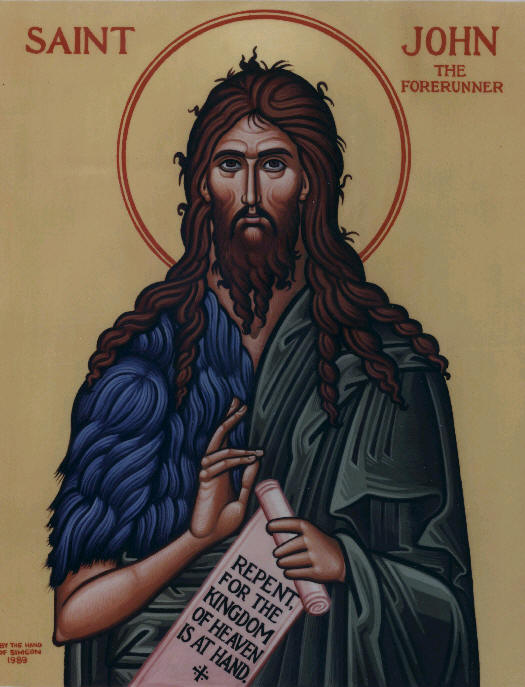
I found the juxtaposition startling. I had just finished jotting down notes on John the Baptist’s ministry in Luke 3:1-20, the short of which was “Repent!” I then scanned some news headlines and noticed that Lance Armstrong confessed. Wow! But he did so on a couch next to Oprah. Give me a break.


Repentance translates a Greek term, metanoia (μετάνοια; “change of mind, thought”), that indicates an alteration in one’s perspective that results in a change of behavior or pattern of life. It’s Old Testament roots are shub (שׁוּב; “turn; return”), as in return to God (e.g., Mal 3:7). As the converse side of faith – you turn from sin and turn toward God – repentance is no less the fruit of His sovereign grace as faith itself (e.g., Acts 11:18; 2 Tim 2:25). Unfortunately, repentance is often confused with a regret or an apology. But repentance is thorough, public and not self-preserving. You are renouncing what you once thought was acceptable and so no longer living in it. To get as practical as John the Baptist, you cease hating others by hoarding goods and begin to share (Luke 3:11). You no longer exploit opportunities beyond your reasonable authority (Luke 3:12). Or you quit using power over others simply for personal profit (Luke 3:14). You get the idea.

I’ve always favored Pink’s definition of repentance as capturing the thrust of the Bible’s teaching:

Repentance is a supernatural and inward revelation from God, giving a deep consciousness of what I am in His sight, which causes me to loathe and condemn myself, resulting in a bitter sorrow for sin, a holy horror and hatred for sin, a turning away from or forsaking of sin. It is the discovery of God’s high and righteous claims upon me, and of my lifelong failure to meet those claims. It is the recognition of the holiness and goodness of His Law, and my defiant insubordination thereto. It is the perception that God has the right to rule and govern me, and of my refusal to submit unto Him. It is the apprehension that He has dealt in goodness and kindness with me, and that I have evilly repaid Him by having no concern for His honor and glory. It is the realization of His gracious patience with me, and how that instead of this melting my heart and causing me to yield loving obedience to Him, I have abused His forbearance by continuing a course of self-will… Thus, genuine and saving repentance is taking sides with God against myself.

- A.W. Pink, Repentance: What Saith the Scriptures?

In other words, repentance is not private, nor ambiguous, nor unrecognizable. It is as evident as the fruit hanging in an orchard (Luke 3:8). You know when you’ve repented and you know when someone else has, too. When they take sides with God against themselves, they’ve repented. When they pull up a chair with Oprah, you know they haven’t.

What’s funny is that even the LA Times gets this point:
This charade should cause an outcry. It is orchestrated manipulation of serious news and an affront to a public that adored and admired him for his athletic feats and charitable use of his celebrity. We weren’t very happy with baseball stars such as Mark McGwire and Alex Rodriguez when they, after years of denying or ducking the issue, admitted steroid use. But at least they came clean to reporters whose job it is to ask the things the public deserves to know. No hankies or couches. Just the cold truth.
Armstrong should be doing this in a big room filled with people with journalistic chops and the experience and inclination to use them. We have more than a handful of Pulitzer Prize winners in the L.A. Times newsroom willing and able. The New York Times and Washington Post could fill the room with capable reporters. CNN has plenty. The TV networks too.
… If you are going to ‘fess up, don’t make a Hollywood show out of it. This is making a sham out of shame.
Sadly, this Oprah episode will get a huge audience. We are a society of celebrity gawkers. We need less “Access Hollywood” and more PBS and NPR, but that’s not happening. It would be nice, on this one, if we could avoid slipping further into the abyss.

Lance Armstrong owes us the truth, the whole truth and nothing but the truth. And he owes it to us from somewhere other than the Oprah show, in which they cue the tears and hankies before they cut to commercial.

Bill Dwyre, in an article titled “Lance Armstrong Picks Wrong Way to Come Clean after Playing Dirty,” summed up the whole situation well: “This is making a sham out of shame.”

The LA Times gets it, but I wonder how many Christians will confuse Armstrong’s theatrics (not to mention Oprah’s opportunism!) with actual contrition, real repentance. Truth is, in many of our churches, we will accept a lot less than this as a substitute for repentance. When someone is overwhelmed by the consequences of their actions, or they regret the shame of being discovered, or some crisis shocks them into a (short-lived) sobriety, or if they just “feel bad” about what they’ve done – we’ll often call it repentance. But it is not. And we do not even need time to tell.

Repentance is not self-preserving – do you think that the tax collectors and soldiers who came to John were going to have to adjust their standard of living by repenting? Repentance is not private – people were actually to start receiving tunics and giving less to the soldiers and tax collectors. But Armstrong is just altering his public persona, from self-sufficient athlete to self-sufficient celebrity who was “brave enough” to feel bad about being caught on a television event. He’s just taking a different tack to privately preserving self-sufficiency.
Oprah has said that she’ll leave it for others to judge whether Armstrong is actually contrite – which translates a Greek idiom that means: “Be sure to watch!” I won’t be watching, I don’t need to. Because I’m pretty sure what John the Baptist would have said, “It’s just Oprah, not metanoia."

Sunday, July 8, 2012

Quote of the Day

“True repentance will entirely change you; the bias of your souls will be changed, then you will delight in God, in Christ, in His Law, and in His people.”
– George Whitefield

Saturday, February 25, 2012

The Archaeology of Repentance

From Roy Ortlund:

In a sermon preached during the First Great Awakening, George Whitefield laid bare the four archaeological layers always uncovered in true repentance. Preaching on “They have healed the wound of my people lightly, saying, ‘Peace, peace,’ when there is no peace” (Jeremiah 6:14), Whitefi
eld said that before we can speak peace to our hearts:

One, “You must be made to see, made to feel, made to weep over, made to bewail, your actual transgressions against the law of God.” The dawning of realism. Honesty. Brokenhearted self-awareness. “Was ever the remembrance of your sins grievous to you? Was the burden of your sins intolerable to your thoughts? Did ever any such thing as this pass between God and your soul? If not, for Jesus Christ’s sake, do not call yourselves Christians.”

Two, “You must be convinced of the foundation of all your transgressions. And what is that? I mean original sin.” We realize that, even when we haven’t acted on our impulses, the very fact that our hearts rise up against God is itself damning. All self-hope stripped away. “When the sinner is first awakened, he begins to wonder, ‘How came I to be so wicked?’ The Spirit of God then strikes in and shows that he has no good thing in him by nature.”

Three, “You must be troubled for the sins of your best duties and performances.” Our righteous self-images start to unravel, our excuses, our rationalizations, our entitlements. Every self-invented refuge collapses. “You must be brought to see that God may damn you for the best prayer you ever put up. Our best duties are so many splendid sins. There must be a deep conviction before you can be brought out of your self-righteousness; it is the last idol taken out of the heart.”

Four, “There is one particular sin you must be greatly troubled for, and yet I fear there are few of you think what it is. It is the reigning, the damning sin of the Christian world, and yet the Christian world seldom or never thinks of it. And pray what is that? It is what most of you think you are not guilty of, and that is the sin of unbelief.” Treating God as unreal at a functional level in our hearts and lives and churches and strategies. “Most of you have not so much faith in the Lord Jesus Christ as the devil himself. I am persuaded the devil believes more of the Bible than most of you do.”

“One more then. Before you can speak peace to your heart, you must not only be convinced of your actual and original sin, the sins of your own righteousness, the sin of unbelief, but you must be enabled to lay hold upon the perfect righteousness, the all-sufficient righteousness, of the Lord Jesus Christ. Then you shall have peace.”

Select Sermons of George Whitefield, pages 75-95.

Monday, January 23, 2012

Quote of the Day

“The Christian who has stopped repenting has stopped growing.”
– A.W. Pink

Tuesday, January 17, 2012

The Absolute Necessity of Repentance

You live in a world of cheating, imposition, and deception. Let no man deceive you about the necessity of repentance. Oh, that professing Christians would see, and know, and feel, more than they do—the necessity, the absolute necessity, of true repentance towards God! There are many things which are not needful. Riches are not needful. Health is not needful. Fine clothes are not needful. Noble friends are not needful. The favor of the world is not needful. Gifts and learning are not needful. Millions have reached heaven without these things. Thousands are reaching heaven every year without them. But no one ever reached heaven without “repentance toward God, and faith toward our Lord Jesus Christ.”

~ J.C. Ryle

Monday, December 26, 2011

The Ordinary Means of Grace

While doing some study this week I came across this wonderful little quote from Thomas Chalmers. Here he discusses the central role of the very ordinary means of God’s grace.
________________________________________

In bygone days when God’s covenant people sought to strengthen their piety, to sharpen their effectual intercessions, and give passion to their supplications, they partook of the means of grace in all holiness with humble prayer and fasting.

When intent upon seeking the Lord God’s guidance in difficult after-times, they partook of the means of grace in all holiness with humble prayer and fasting.

When they were wont to express grief—whether over the consequences of their own sins or the sins of others—they partook of the means of grace in all holiness with humble prayer and fasting.

When they sought deliverance or protection in times of trouble, they partook of the means of grace in all holiness with humble prayer and fasting.

When they desired to express repentance, covenant renewal, and a return to the fold of faith, they partook of the means of grace in all holiness with humble prayer and fasting.

Such is the call upon all who would name the Name of Jesus. Such is the ordinary Christian life.

Saturday, December 10, 2011

Quote of the Day

“God doesn’t love you because you repented. You repented because He loved you.”

– R C Sproul, Jr

Friday, November 25, 2011

Remorse vs. Repentance

Cast me not away from thy presence; and take not thy holy spirit from me. —Psalm 51:11

Martyn Lloyd-Jones on the nature of genuine repentance, as seen in Psalm 51:

I do not hesitate to assert that this is perhaps the most subtle and delicate test as to whether we have repented, or where we are: our attitude towards God. Have you noticed it in the psalm? The one against whom David has sinned is God, and yet the one he desires above all is God. That is the difference between remorse and repentance. The man who has not repented, but who is only experiencing remorse, when he realizes he has done something against God, avoids God. . . . The man who has not been dealt with by the Spirit of God and has not been convinced and convicted, tries to get away from God, to avoid him at all costs. He does not think, he does not read the Bible, he does not pray; he does everything he can not to think about these things. But the extraordinary thing about the man who is convicted of sin by the Holy Spirit is that though he knows he has sinned against God, it is God he wants—“Be merciful to me, O God.” He wants to be with God—that is the peculiar paradox of repentance, wanting the one I have offended!